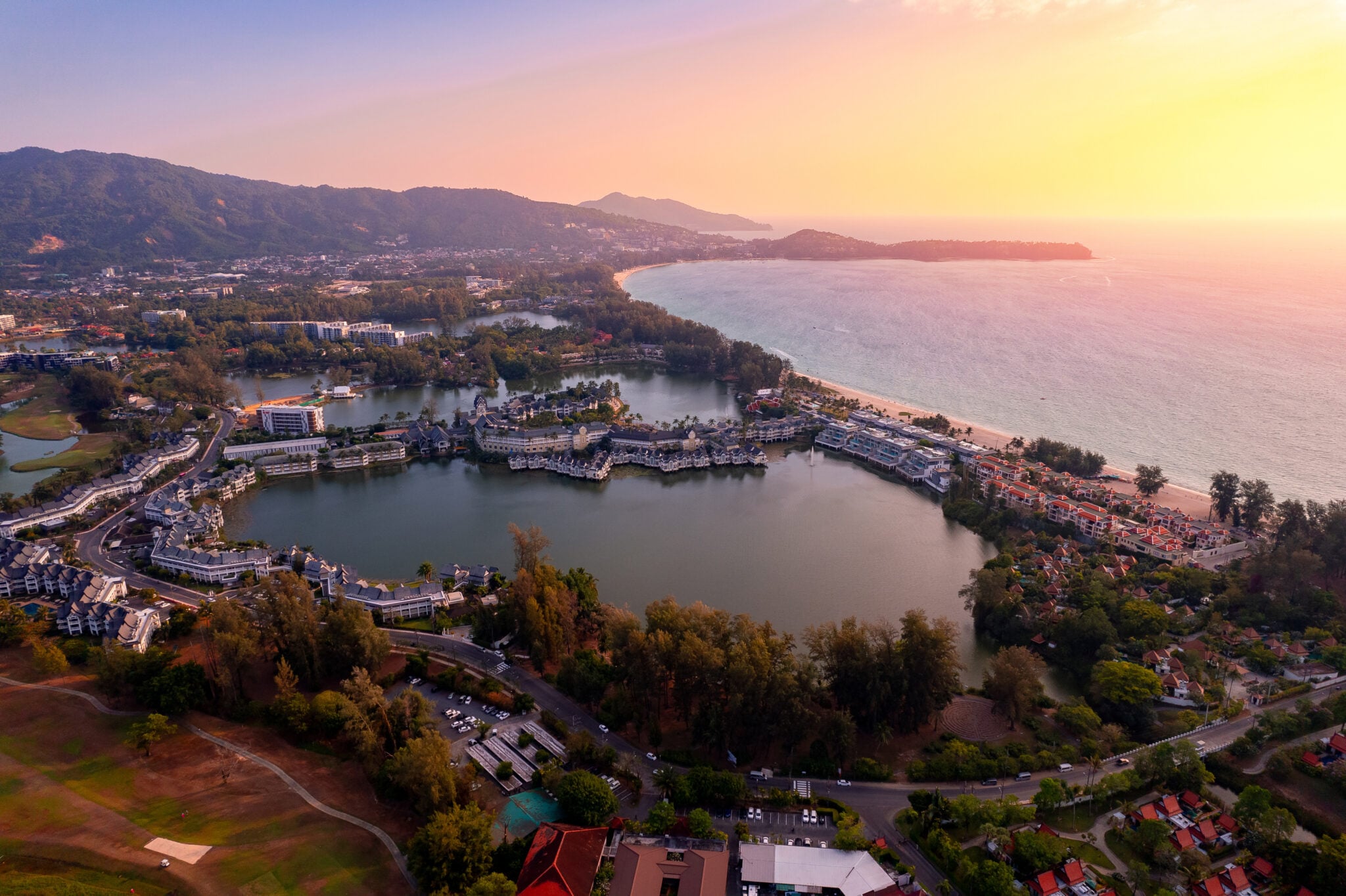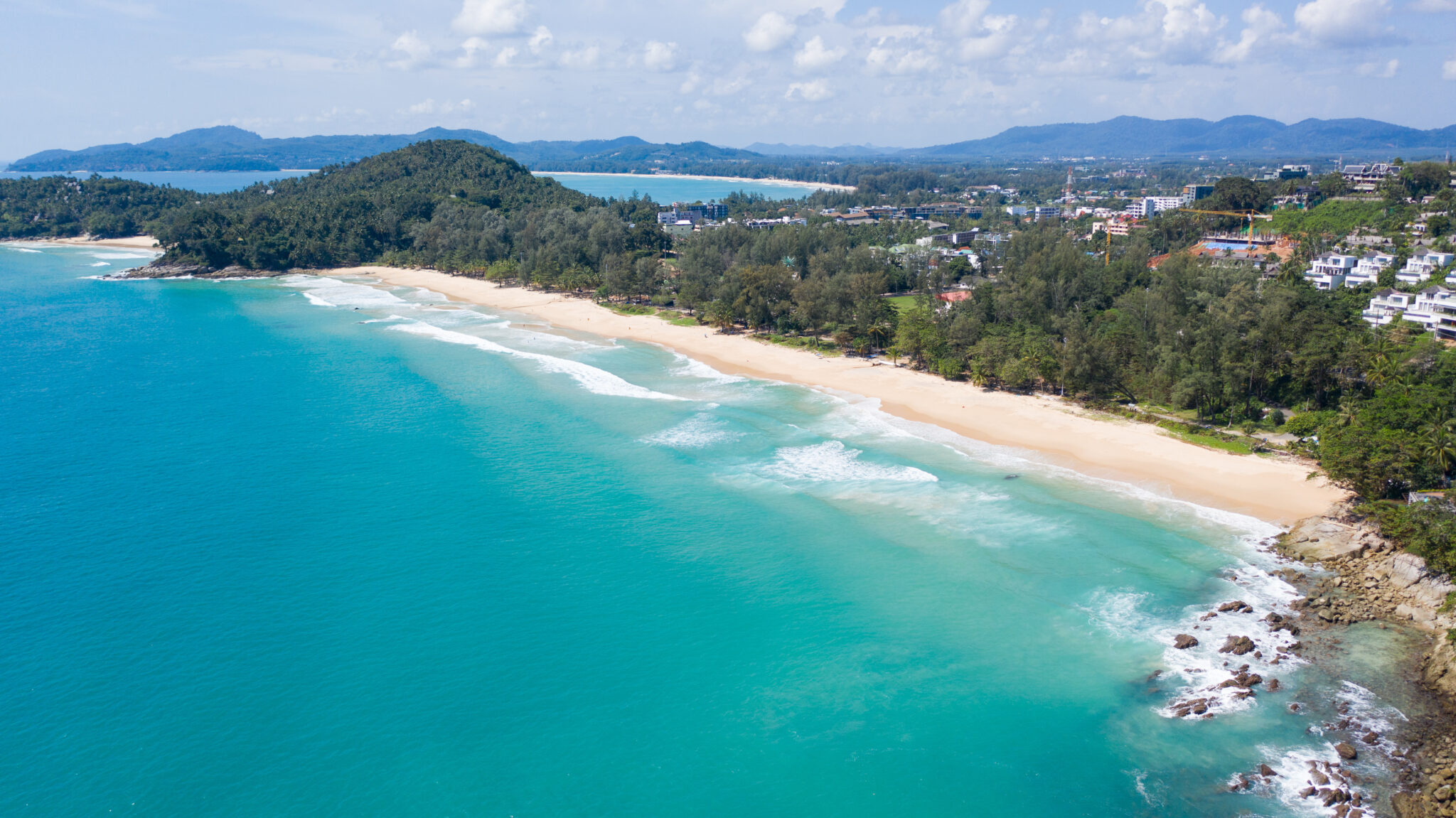

Patong is the Phuket most of the world has heard of, and the one most of my clients have already decided against before we speak. That is worth revisiting. Behind the three kilometres of beach, the walking street and the malls, there is a large, liquid and unusually well-connected property market: more condominiums than any other bay on the island, a hillside villa belt with genuine sea views, and a quieter northern end at Kalim that many buyers do not know exists. Patong is not for everyone. For the owner who is buying for income rather than for a life here, it deserves a proper look.
The lifestyle
Patong is a town, not a village. It has a hospital, two large shopping centres, a proper supermarket, a cinema, hundreds of restaurants across every price point, and a beach that is busy from breakfast to sunset. It also has Bangla Road, and if you live within earshot of it you will know. The lifestyle here is walkable and open late, which is either the whole point or the whole problem depending on who you are.
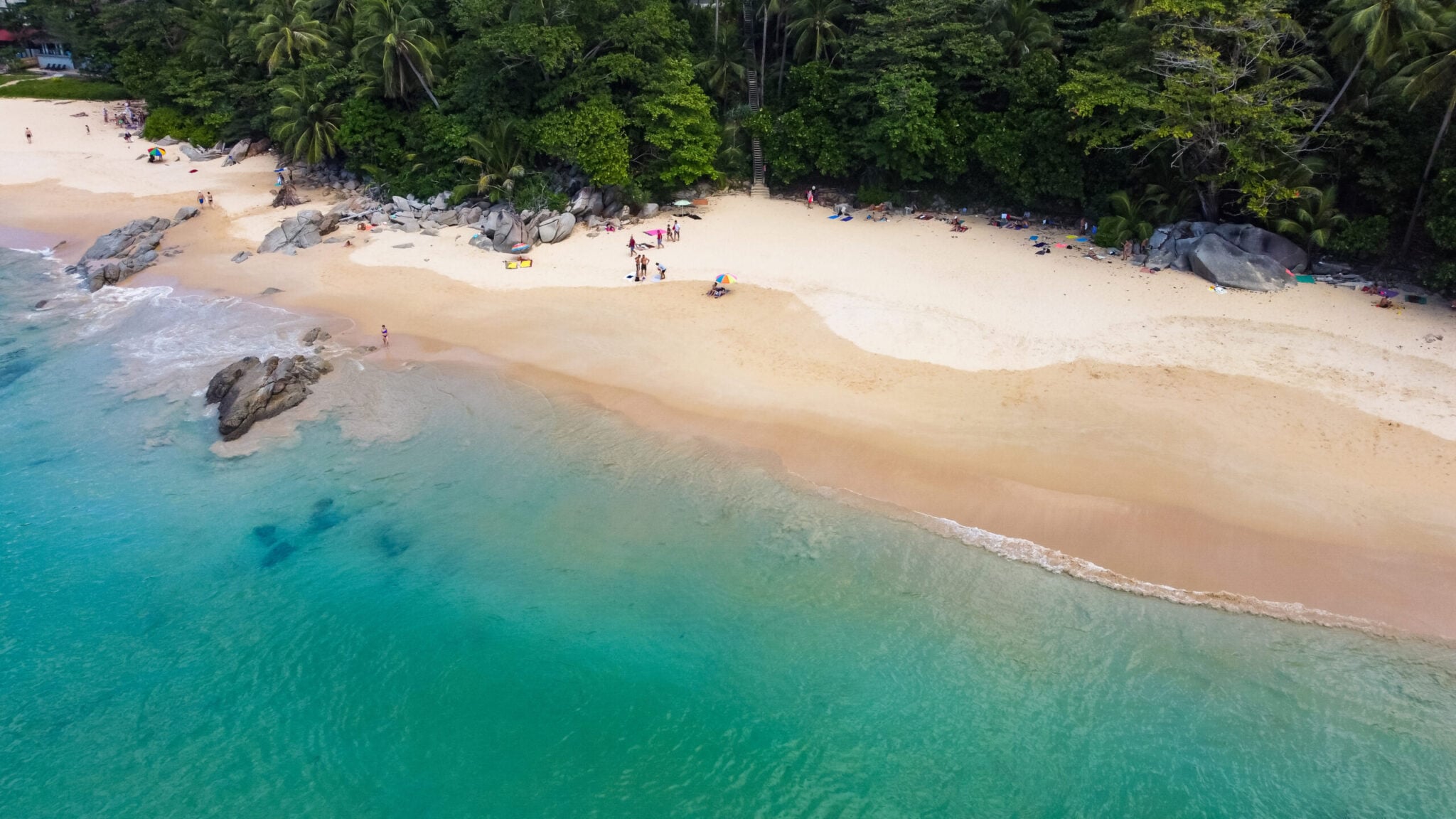
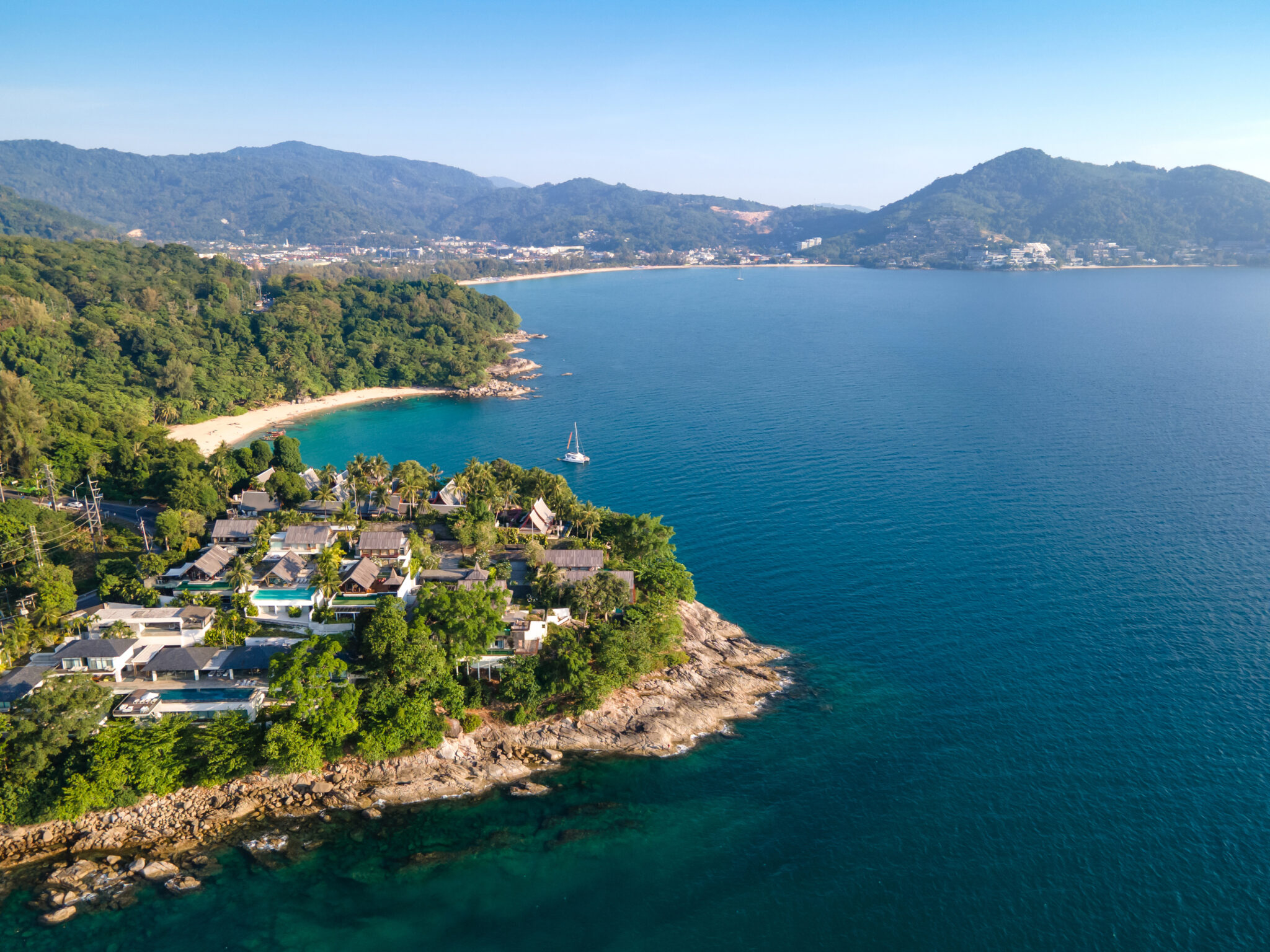
The town splits into distinct districts, and buyers should think in those terms. The flat centre and the strip behind the beach are the busiest and the most commercial. The southern hillside above the town, towards the road to Karon, is residential, elevated and quiet by comparison, with condominiums and villas looking back over the bay. Kalim, at the northern end where the coast road climbs towards Kamala, is a different place entirely: a rocky shoreline, a handful of good restaurants, and some of the best sea-view addresses on the west coast, ten minutes from the noise but not in it.
Who it suits
Patong suits the owner whose priority is rental income and liquidity. The tourist demand is the deepest on the island, the season is longest, and a well-run condominium here lets faster and sells faster than almost anywhere else. It suits the buyer who wants walkable everything, who does not want to depend on a car, and who is honest with themselves about enjoying a town that is awake at midnight. And it suits the buyer who wants a sea-view villa or condo at Kalim, the quieter northern end, with Patong’s restaurants and services ten minutes away rather than outside the window.
It suits less well the family buyer, the buyer looking for a permanent home with a garden and a school run, and the buyer who wants the polish of Bang Tao or the quiet of Layan. Those buyers are usually happier north, and part of my job is saying so.
The property landscape
Patong is a condominium market first. The stock runs from older low-rise blocks in the centre, through the hillside developments of the last fifteen years, to a current wave of off-plan releases on the slopes with rental programmes attached. Villas are fewer and almost all on the hills: some older houses on the southern ridge, a run of newer gated villa estates on the road out to Kathu, and at Kalim a small number of sea-view villas that compete with Surin and Kamala on price.
Resale condominiums start from around ฿3.5 million for an older studio or one-bedroom in the centre, with sea-view units in the better hillside buildings from ฿6 million to ฿15 million. New off-plan condominiums have moved sharply upmarket and now start from around ฿9 million for a one-bedroom, with two-bedrooms reaching ฿20 million or more. Villas on the hillside estates start from around ฿20 million off-plan and ฿25 million resale, and Kalim sea-view villas run from ฿40 million to well above ฿100 million.
The specific warning for Patong: this is where the rental-guarantee and rental-programme model is most aggressively sold. A guaranteed return is a discount on the price you paid, offered back to you over time by the person who set the price. Value the unit on what it would rent for without the guarantee, check the building’s management and the strength of the freehold quota, and treat the brochure yield as marketing. I would rather you bought a plain resale unit in a well-run building than a guaranteed one in a building nobody has managed yet.
Renting in Patong
Patong has the deepest rental market on the island and the widest spread. Roughly 71 percent of property demand island-wide is to rent rather than buy, and in Patong a large share of that is short-stay tourist demand that other bays cannot match. Condominiums on a twelve-month lease start from around ฿20,000 a month for an older one-bedroom, with sea-view units in the better buildings from ฿40,000 to ฿80,000. Villas start from around ฿80,000 a month on the hillside estates, with Kalim sea-view villas from ฿200,000 upward. My own rental work sits at the villa end of that range; the numbers here describe the market, not my list.
For owners, the trade is between the higher headline income of short-stay letting and the simpler life of a long lease. Short-stay letting of a residential condominium is regulated in Thailand, buildings set their own rules, and the enforcement picture has tightened. Before you buy on a short-let assumption, confirm what the building’s juristic office actually permits, in writing.
Looking to rent in Patong or Kalim, or own a unit here and want a straight read on what it would command? Message me on WhatsApp.
Getting around
Patong sits on the central west coast, roughly forty-five minutes from Phuket International Airport outside peak traffic, and behind it the road over Patong Hill runs to Kathu and on to Phuket Town in around twenty-five minutes. Kamala is fifteen minutes north on the coast road, Karon and Kata fifteen minutes south. Patong has its own hospital, and the island’s largest private hospital is around twenty minutes east.
The honest caveats. Patong Hill is a steep, winding road that carries heavy traffic and is the only quick route east; a tunnel under it has been planned for years and its status should be checked at the time you buy rather than assumed. Parking in the centre is difficult, the walking street area is loud until late, and the flat centre floods in heavy rain. If you are looking at the hillside, drive the access road at night and in the wet, and stand on the balcony with the windows open before you decide.
Buying and renting here: the practical part
The essentials in brief, because the detail belongs with your lawyer and in the dedicated guides. Foreign buyers can own condominium units freehold under Thailand’s Condominium Act, within the 49 percent foreign ownership quota per building, with purchase funds remitted from abroad and documented. In Patong specifically, the foreign quota in popular buildings is often full, which means a unit may be offered to you leasehold or through a company at a freehold price; know which you are buying. Villas sit on land, which foreigners cannot own, so villa purchases are typically structured as a registered 30-year lease. Following the Thai Supreme Court’s ruling on promised renewals, treat 30 years as the term: pre-agreed renewals beyond it are not enforceable, whatever the brochure says, and a purchase should be priced on that basis. Rental agreements over three years must be registered to be enforceable beyond three.
None of this is a reason to avoid Patong. It is a reason to structure properly, use an independent lawyer rather than the seller’s, and work with someone who will tell you the position straight. I cover ownership structures and the full cost picture in separate guides: Foreign Ownership in Phuket: How It Actually Works and What Buying in Phuket Actually Costs.
Selling in Patong
Patong sells on numbers. The buyer here is more often an investor than a homemaker, from Australia, Singapore, Hong Kong, India, Russia or China, and the first questions are about yield, occupancy and the building, not about the finishes. A listing that shows the rental history, the management fees, the sinking fund position and the freehold quota status will outperform one with better photographs and none of that.
Condominiums here are liquid but competitive: there is nearly always something comparable on the market, so pricing to the last sold, not to the highest asking, is what gets a transaction. Kalim and hillside villas are a smaller, slower market where the view and the tenure carry the price, and where a buyer will pay for a clean lease structure and walk from a complicated one. Patong is also the one bay where an owner selling a unit with a rental programme attached needs to understand exactly what obligations transfer with it.
If you own in Patong or Kalim and want a view on what it would achieve and who would buy it, I am happy to give you one.
Patong: the questions I get asked
Is Patong a good place to buy property in Phuket? For rental income and liquidity, it is one of the strongest markets on the island. For a quiet permanent home or a family base, it usually is not. The answer depends entirely on what you want the property to do.
What do condos cost in Patong? Resale condominiums start from around ฿3.5 million, sea-view units in the better hillside buildings run ฿6 million to ฿15 million, and new off-plan units start from around ฿9 million. Figures are a guide to the market, not a valuation of any specific unit.
Can foreigners buy a condo in Patong? Yes, freehold, within the 49 percent foreign quota per building. In Patong the quota in popular buildings is often full, so check the position before you commit and be clear whether you are being offered freehold, leasehold or a company structure.
Where is the quiet part of Patong? Kalim, at the northern end, and the southern hillside above the town. Both are residential and elevated, with sea views, and both are a short drive from the centre rather than in it.
Can I rent my Patong condo out short term? Only if the building permits it and the letting complies with Thai law, which regulates short stays in residential buildings. Get the juristic office’s position in writing before you buy on that assumption.
Talk to me about Patong
I advise on property across Phuket. If you are weighing Patong against the northern bays, looking at a unit with a rental programme attached, or want an honest read on a specific building or villa, get in touch. No obligation, no sales pitch.
Message me on WhatsApp or send an enquiry through the contact page.
Rex Butler Founder & Principal Advisor, Butler Estates rex@butlerestates.com
This guide is general information, not legal or tax advice. Ownership structures, fees and taxes depend on your circumstances and change over time. Take independent legal advice before committing to any purchase or lease in Thailand.
Project content
Created by you
Patong is the Phuket most of the world has heard of, and the one most of my clients have already decided against before we speak. That is worth revisiting. Behind the three kilometres of beach, the walking street and the malls, there is a large, liquid and unusually well-connected property market: more condominiums than any other bay on the island, a hillside villa belt with genuine sea views, and a quieter northern end at Kalim that many buyers do not know exists. Patong is not for everyone. For the owner who is buying for income rather than for a life here, it deserves a proper look.
The lifestyle
Patong is a town, not a village. It has a hospital, two large shopping centres, a proper supermarket, a cinema, hundreds of restaurants across every price point, and a beach that is busy from breakfast to sunset. It also has Bangla Road, and if you live within earshot of it you will know. The lifestyle here is walkable and open late, which is either the whole point or the whole problem depending on who you are.
The town splits into distinct districts, and buyers should think in those terms. The flat centre and the strip behind the beach are the busiest and the most commercial. The southern hillside above the town, towards the road to Karon, is residential, elevated and quiet by comparison, with condominiums and villas looking back over the bay. Kalim, at the northern end where the coast road climbs towards Kamala, is a different place entirely: a rocky shoreline, a handful of good restaurants, and some of the best sea-view addresses on the west coast, ten minutes from the noise but not in it.
Who it suits
Patong suits the owner whose priority is rental income and liquidity. The tourist demand is the deepest on the island, the season is longest, and a well-run condominium here lets faster and sells faster than almost anywhere else. It suits the buyer who wants walkable everything, who does not want to depend on a car, and who is honest with themselves about enjoying a town that is awake at midnight. And it suits the buyer who wants a sea-view villa or condo at Kalim, the quieter northern end, with Patong’s restaurants and services ten minutes away rather than outside the window.
It suits less well the family buyer, the buyer looking for a permanent home with a garden and a school run, and the buyer who wants the polish of Bang Tao or the quiet of Layan. Those buyers are usually happier north, and part of my job is saying so.
The property landscape
Patong is a condominium market first. The stock runs from older low-rise blocks in the centre, through the hillside developments of the last fifteen years, to a current wave of off-plan releases on the slopes with rental programmes attached. Villas are fewer and almost all on the hills: some older houses on the southern ridge, a run of newer gated villa estates on the road out to Kathu, and at Kalim a small number of sea-view villas that compete with Surin and Kamala on price.
Resale condominiums start from around ฿3.5 million for an older studio or one-bedroom in the centre, with sea-view units in the better hillside buildings from ฿6 million to ฿15 million. New off-plan condominiums have moved sharply upmarket and now start from around ฿9 million for a one-bedroom, with two-bedrooms reaching ฿20 million or more. Villas on the hillside estates start from around ฿20 million off-plan and ฿25 million resale, and Kalim sea-view villas run from ฿40 million to well above ฿100 million.
The specific warning for Patong: this is where the rental-guarantee and rental-programme model is most aggressively sold. A guaranteed return is a discount on the price you paid, offered back to you over time by the person who set the price. Value the unit on what it would rent for without the guarantee, check the building’s management and the strength of the freehold quota, and treat the brochure yield as marketing. I would rather you bought a plain resale unit in a well-run building than a guaranteed one in a building nobody has managed yet.
Renting in Patong
Patong has the deepest rental market on the island and the widest spread. Roughly 71 percent of property demand island-wide is to rent rather than buy, and in Patong a large share of that is short-stay tourist demand that other bays cannot match. Condominiums on a twelve-month lease start from around ฿20,000 a month for an older one-bedroom, with sea-view units in the better buildings from ฿40,000 to ฿80,000. Villas start from around ฿80,000 a month on the hillside estates, with Kalim sea-view villas from ฿200,000 upward. My own rental work sits at the villa end of that range; the numbers here describe the market, not my list.
For owners, the trade is between the higher headline income of short-stay letting and the simpler life of a long lease. Short-stay letting of a residential condominium is regulated in Thailand, buildings set their own rules, and the enforcement picture has tightened. Before you buy on a short-let assumption, confirm what the building’s juristic office actually permits, in writing.
Looking to rent in Patong or Kalim, or own a unit here and want a straight read on what it would command? Message me on WhatsApp.
Getting around
Patong sits on the central west coast, roughly forty-five minutes from Phuket International Airport outside peak traffic, and behind it the road over Patong Hill runs to Kathu and on to Phuket Town in around twenty-five minutes. Kamala is fifteen minutes north on the coast road, Karon and Kata fifteen minutes south. Patong has its own hospital, and the island’s largest private hospital is around twenty minutes east.
The honest caveats. Patong Hill is a steep, winding road that carries heavy traffic and is the only quick route east; a tunnel under it has been planned for years and its status should be checked at the time you buy rather than assumed. Parking in the centre is difficult, the walking street area is loud until late, and the flat centre floods in heavy rain. If you are looking at the hillside, drive the access road at night and in the wet, and stand on the balcony with the windows open before you decide.
Buying and renting here: the practical part
The essentials in brief, because the detail belongs with your lawyer and in the dedicated guides. Foreign buyers can own condominium units freehold under Thailand’s Condominium Act, within the 49 percent foreign ownership quota per building, with purchase funds remitted from abroad and documented. In Patong specifically, the foreign quota in popular buildings is often full, which means a unit may be offered to you leasehold or through a company at a freehold price; know which you are buying. Villas sit on land, which foreigners cannot own, so villa purchases are typically structured as a registered 30-year lease. Following the Thai Supreme Court’s ruling on promised renewals, treat 30 years as the term: pre-agreed renewals beyond it are not enforceable, whatever the brochure says, and a purchase should be priced on that basis. Rental agreements over three years must be registered to be enforceable beyond three.
None of this is a reason to avoid Patong. It is a reason to structure properly, use an independent lawyer rather than the seller’s, and work with someone who will tell you the position straight. I cover ownership structures and the full cost picture in separate guides: Foreign Ownership in Phuket: How It Actually Works and What Buying in Phuket Actually Costs.
Selling in Patong
Patong sells on numbers. The buyer here is more often an investor than a homemaker, from Australia, Singapore, Hong Kong, India, Russia or China, and the first questions are about yield, occupancy and the building, not about the finishes. A listing that shows the rental history, the management fees, the sinking fund position and the freehold quota status will outperform one with better photographs and none of that.
Condominiums here are liquid but competitive: there is nearly always something comparable on the market, so pricing to the last sold, not to the highest asking, is what gets a transaction. Kalim and hillside villas are a smaller, slower market where the view and the tenure carry the price, and where a buyer will pay for a clean lease structure and walk from a complicated one. Patong is also the one bay where an owner selling a unit with a rental programme attached needs to understand exactly what obligations transfer with it.
If you own in Patong or Kalim and want a view on what it would achieve and who would buy it, I am happy to give you one.
Patong: the questions I get asked
Is Patong a good place to buy property in Phuket? For rental income and liquidity, it is one of the strongest markets on the island. For a quiet permanent home or a family base, it usually is not. The answer depends entirely on what you want the property to do.
What do condos cost in Patong? Resale condominiums start from around ฿3.5 million, sea-view units in the better hillside buildings run ฿6 million to ฿15 million, and new off-plan units start from around ฿9 million. Figures are a guide to the market, not a valuation of any specific unit.
Can foreigners buy a condo in Patong? Yes, freehold, within the 49 percent foreign quota per building. In Patong the quota in popular buildings is often full, so check the position before you commit and be clear whether you are being offered freehold, leasehold or a company structure.
Where is the quiet part of Patong? Kalim, at the northern end, and the southern hillside above the town. Both are residential and elevated, with sea views, and both are a short drive from the centre rather than in it.
Can I rent my Patong condo out short term? Only if the building permits it and the letting complies with Thai law, which regulates short stays in residential buildings. Get the juristic office’s position in writing before you buy on that assumption.
Talk to me about Patong
I advise on property across Phuket. If you are weighing Patong against the northern bays, looking at a unit with a rental programme attached, or want an honest read on a specific building or villa, get in touch. No obligation, no sales pitch.
Message me on WhatsApp or send an enquiry through the contact page.
Rex Butler Founder & Principal Advisor, Butler Estates rex@butlerestates.com
This guide is general information, not legal or tax advice. Ownership structures, fees and taxes depend on your circumstances and change over time. Take independent legal advice before committing to any purchase or lease in Thailand.
Looking for something specific?
Tell me what you need and I’ll come back with options that match. If I don’t have the answer to something, I’ll tell you, then I’ll go and get it. No obligation, no pressure.