
The short version
- Chalong is a residential subdistrict of villas and housing estates, with Phuket Town, Central Phuket and the main hospitals within about 15 minutes
- C9 Hotelworks puts 631 of Phuket’s 43,481 pipeline residential units, about 1.5%, in its Chalong Bay zone, so new stock is limited
- The trade is the beach and the airport, since the bay is a working harbour and the airport is about 45 minutes away
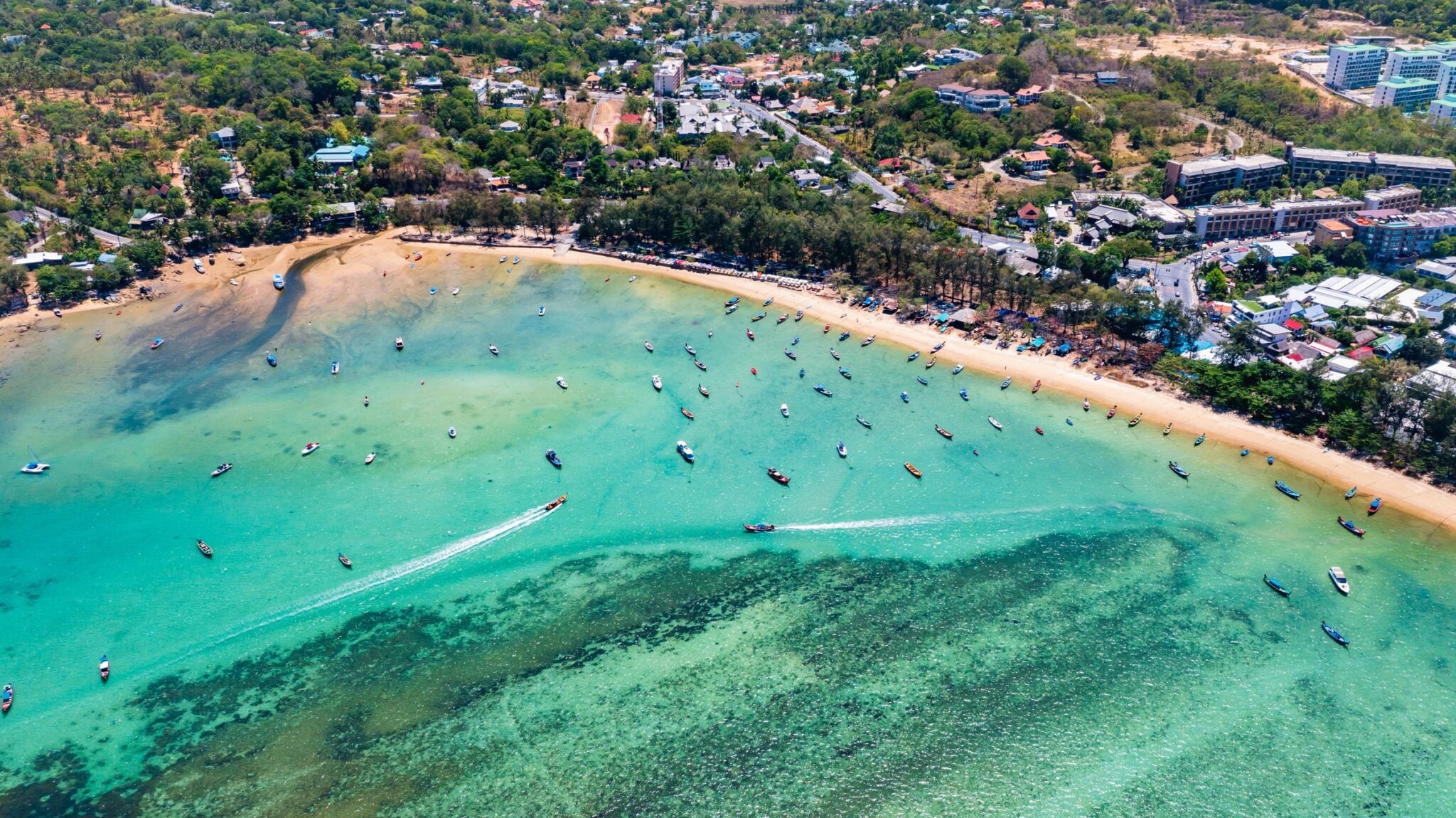
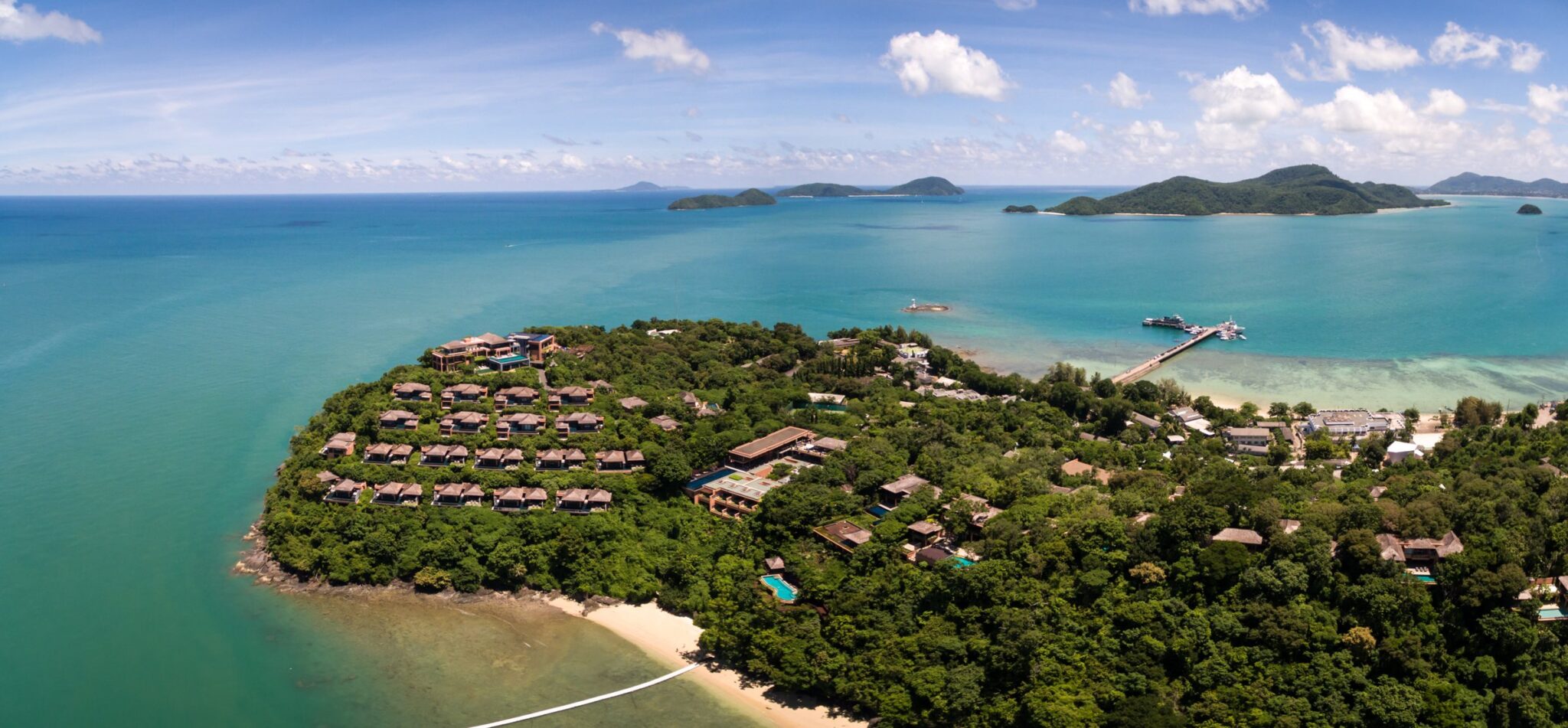
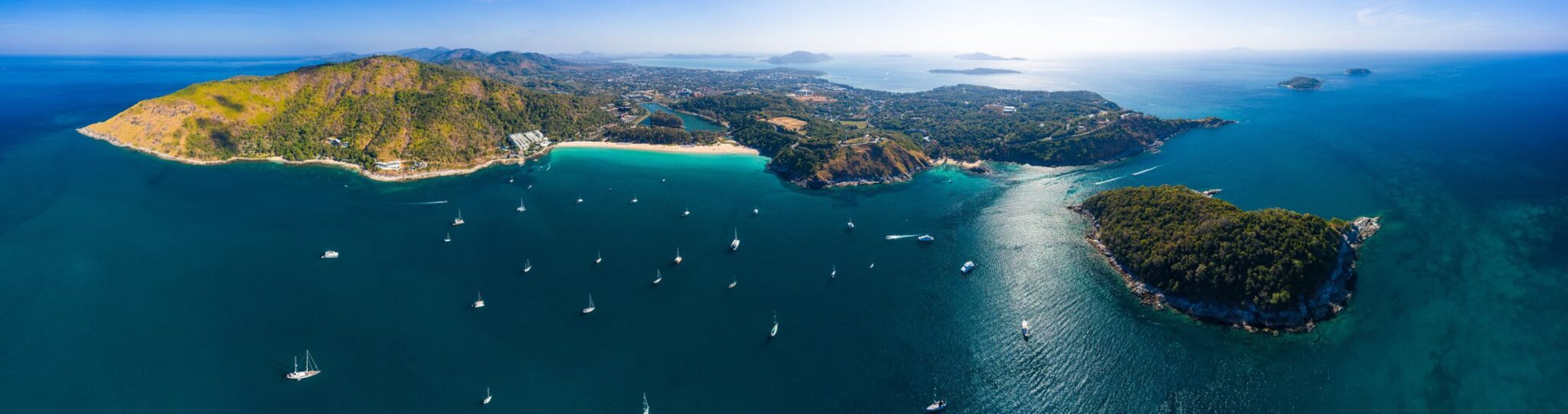
Chalong is the residential middle of south Phuket. It is the subdistrict between Phuket Town and Rawai, built around Chalong Bay and Wat Chalong. The Chalong circle sits at its southern edge. It is residential first: pool villas and housing estates off Chao Fa West and Chao Fa East roads, with several international schools close by. The bay is a working harbour, so the swimming beaches at Kata and Nai Harn are about 10 to 15 minutes away by car. In exchange, Phuket Town, Central Phuket and the main hospitals are all within about 15 minutes outside peak hours.
The lifestyle
Wat Chalong, formally Wat Chaiyathararam, stands on Chao Fa West Road about 3 km north of the circle. Its 60-metre chedi holds a fragment of bone said to be the Buddha’s.
Up on Nakkerd Hill to the west is the Big Buddha, 45 metres of concrete clad in Burmese white marble, facing Chalong Bay. The road up starts off Chao Fa West. The hilltop itself falls in Karon subdistrict, so the area names used in listings are approximate.
Chalong Bay is a working harbour and yacht anchorage. Chalong Pier is about 3 km east of the circle. It is the base for dive boats, private charters and speedboat trips to Coral Island and the Racha islands. Visiting yachts clear in here too: Immigration, Customs and the Harbour Master share an office on the pier. The pier sits just over the line in Rawai subdistrict.
Soi Ta-iad is a street of about 1.5 km linking Chao Fa West and Chao Fa East north of the temple. It is lined with Muay Thai, MMA and fitness camps, Tiger Muay Thai and Unit 27 CrossFit among them. Robinson Lifestyle Chalong sits on the corner of the soi and Chao Fa East. Daily shopping is covered by Lotus’s on Chao Fa West.
Who it suits
Chalong suits families first. Berda Claude International School (BCIS) is in Chalong itself, about 3 km from the circle. It teaches the Cambridge programme alongside a French one. Lighthouse International School is just south in Rawai. HeadStart International School’s Chaofah City Campus is about 10 minutes away. More on the options in my guide to international schools in Phuket.
It also suits full-time residents who want town within reach. So does anyone training on Soi Ta-iad who wants their own house near the camps.
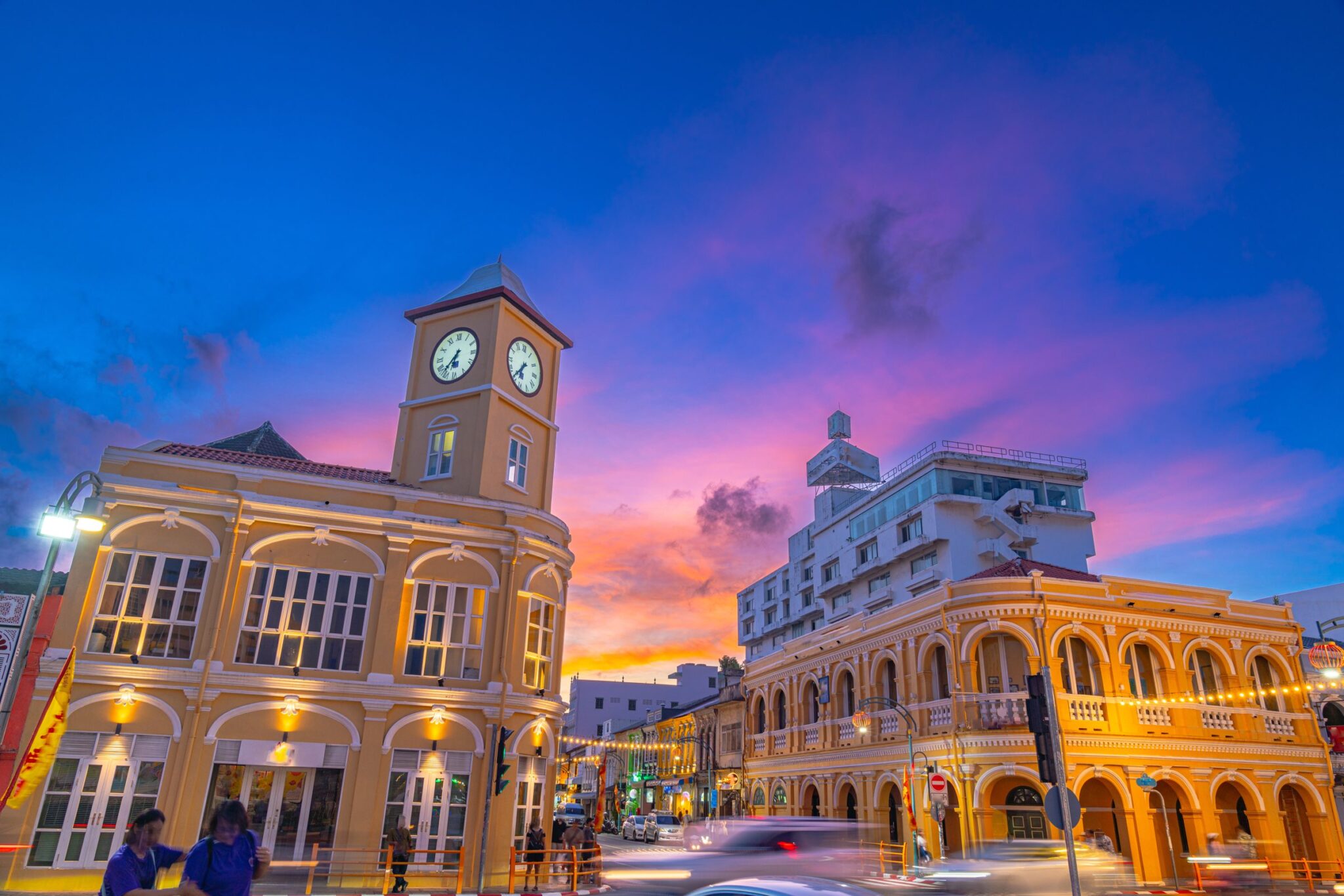
It suits less well the buyer who wants to walk to the sand, or the frequent flyer: the airport is about 45 minutes away. If the beach is the point, Rawai and Nai Harn to the south are the better start. If it is restaurants, old shophouses and city life, that is Phuket Town. Chalong is the trade between the two. The filter question I would ask is simple: does your week run on the school run and errands, or on the beach?
The property landscape
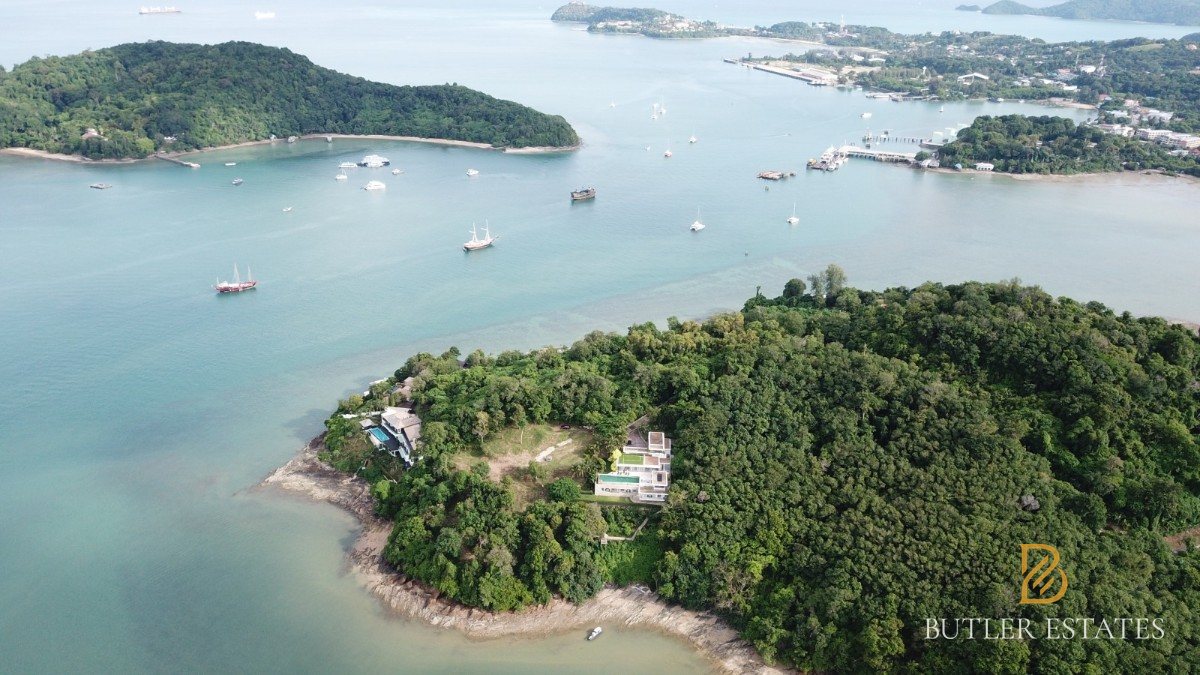
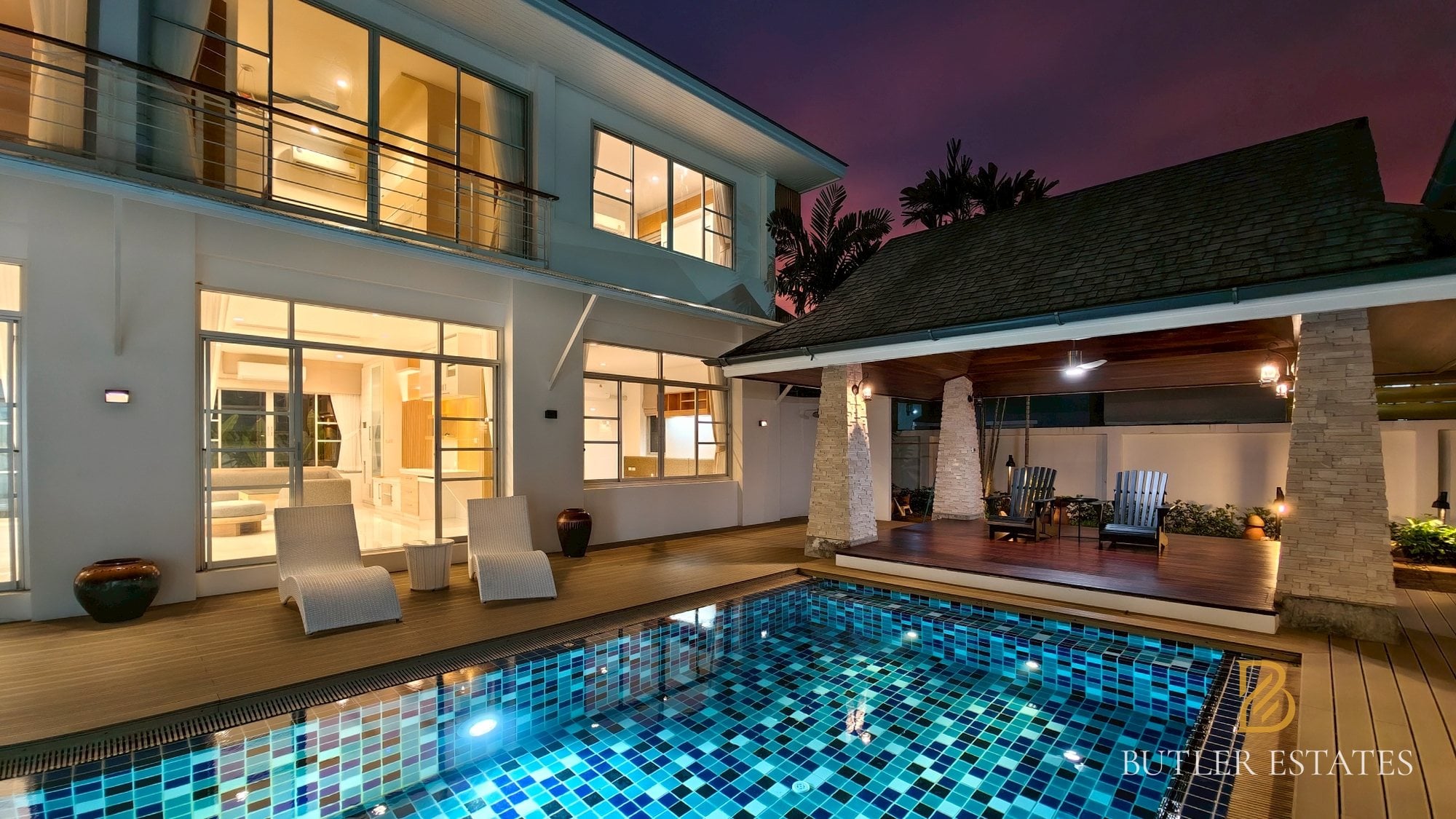
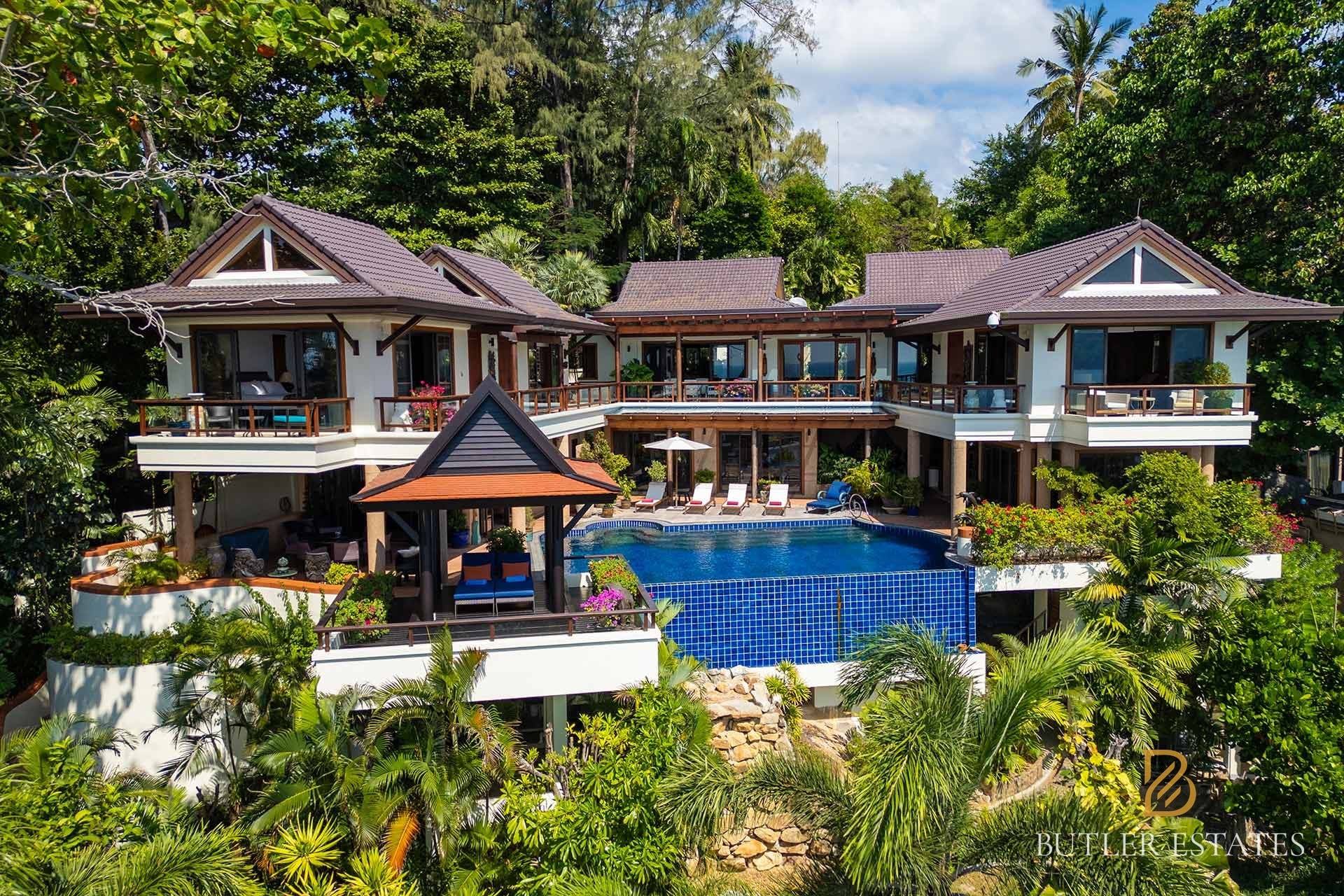
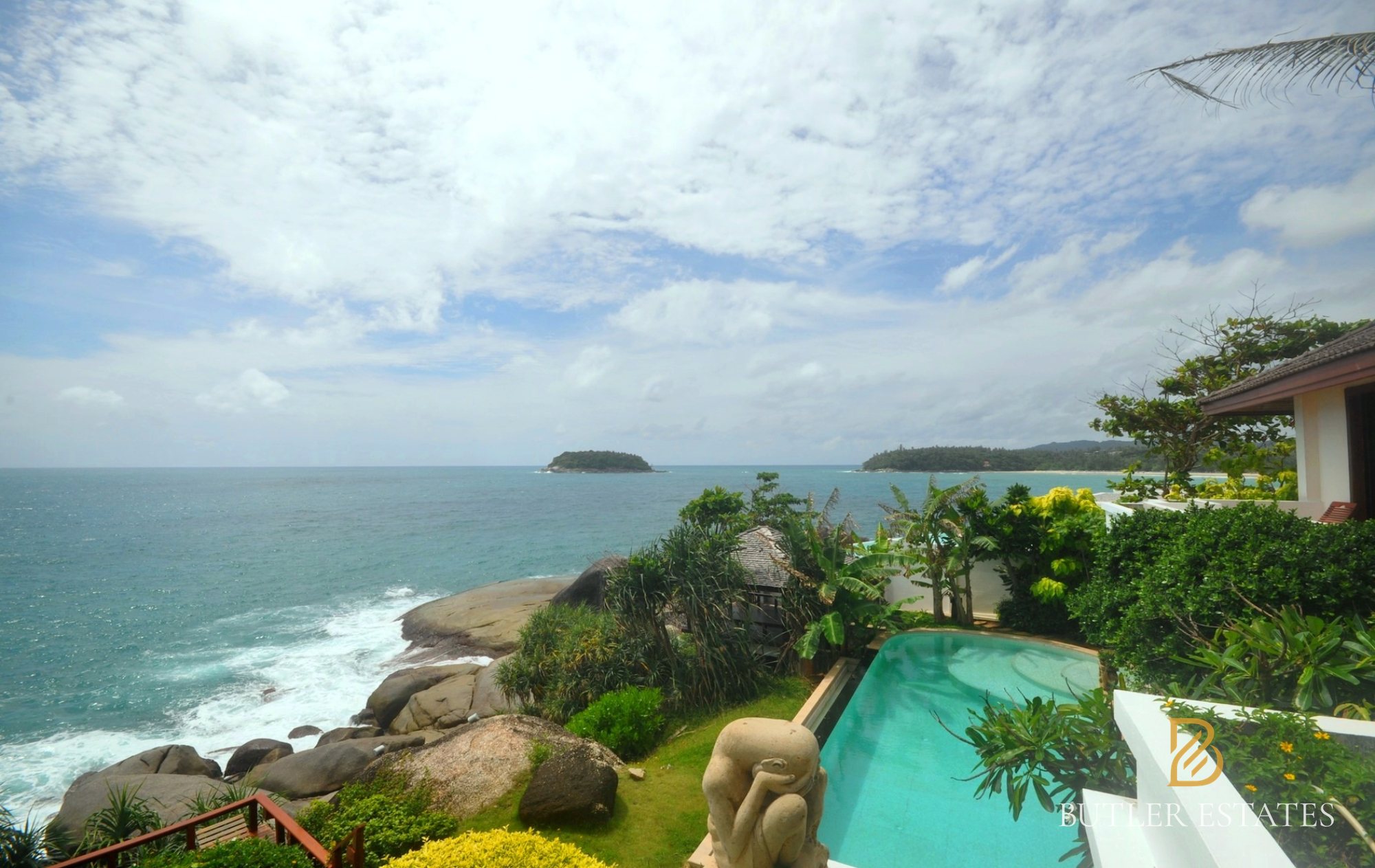
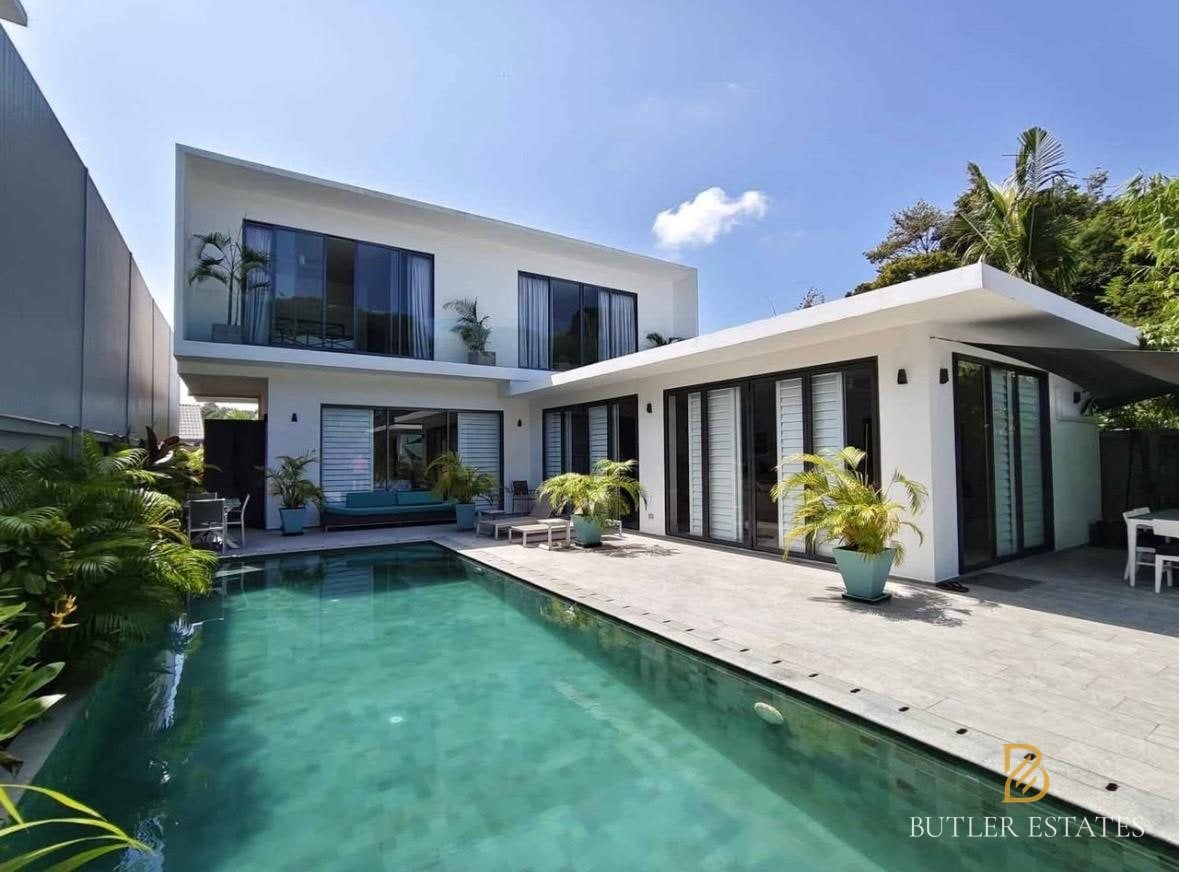
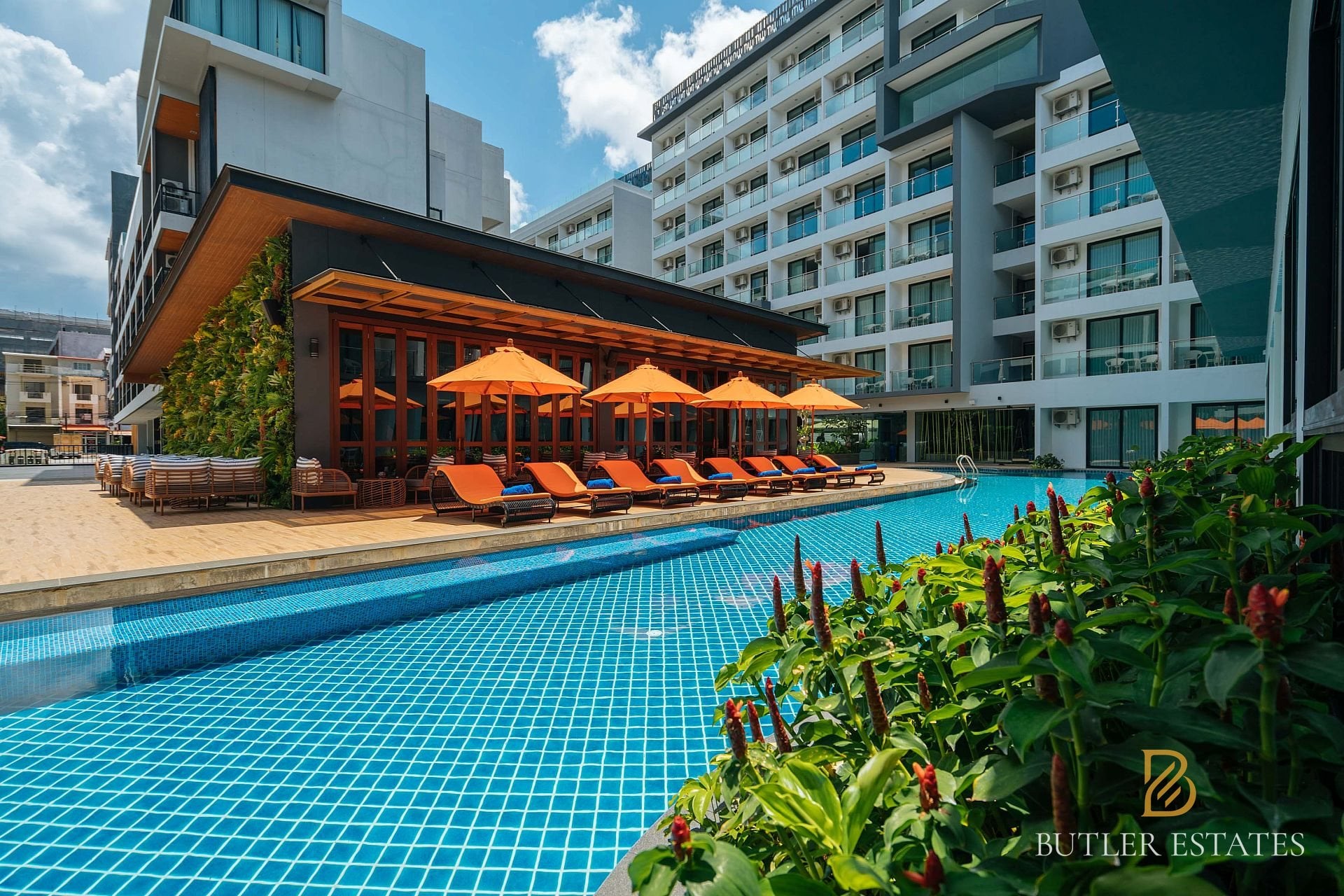
Chalong is mostly villas and housing estates. The stock runs from Thai family townhouses and gated estates of detached homes to private pool villas on the hillsides towards Kata and Palai. There is a smaller layer of low-rise condos. Land plots come up for sale in the green pockets between the main roads.
There is no published price index for Chalong that I would put in front of a client, so I will not quote one. Prices here are set estate by estate. Recent sales on the same estate are where I would start.
The island-wide figures give the context. Knight Frank recorded 631 villa sales across Phuket in 2025, up 12.9% on the year. In H1 2026, CBRE reports, the ฿15–35 million band (about USD 450,000 to 1 million) led new villa launches.
Little of the new building is here. C9 Hotelworks counts 43,481 residential units in Phuket’s pipeline, and puts 631 of them, about 1.5%, in its Chalong Bay zone. Neighbouring Rawai has 5,149, about 12%. For a Chalong owner, I read that as less new stock to compete with at resale.
A buyer weighing a Rawai condo against a Chalong villa is weighing two different markets. The tenants differ, the resale buyers differ and so do the running costs.
On a housing estate, look closely at the estate. Check who owns the roads and common areas, and how the common fees are set and collected. Look at what has been built on the plots around you. Ask your lawyer to read the title and the estate documents together. My guide to Thai title deeds explains what each deed type means.
Renting in Chalong
Most tenants here are residents. The tenants are families near the schools, teachers, people working in town and fitness long-stayers from Soi Ta-iad. I would expect demand to hold up better through the green season than in the beach suburbs. The schools and the town that keep people here are there all year.
For an owner, that means pricing to a resident’s budget and presenting the house for what it offers: the school run and the drive to town. Stays under 30 days need a hotel licence, and many condos ban them outright. A Chalong home is usually a twelve-month let. How letting works is in Renting Long-Term in Phuket.
Looking to rent in Chalong, or own here and want to know what it would let for? Message me on WhatsApp.
Getting around
From the Chalong circle, outside peak hours, Phuket Town’s old quarter is about 11 km (about 15 minutes). Central Phuket is about 10 km, also about 15 minutes, and Phuket International Airport about 40 km (about 45 minutes). Bangkok Hospital Siriroj is about 11 km and Bangkok Hospital Phuket about 13 km, both about 15 minutes. BCIS is about 3 km away, HeadStart about 9 km and Kajonkiet in Kathu about 14 km (about 20 minutes). British International School Phuket is about 21 km (about 25 minutes), and Bang Tao about 32 km, roughly 40 minutes.
The underpass beneath the circle, open since 2019, carries through traffic between Chao Fa West and Viset Road. The planned tram’s first phase would run from the airport to the Chalong circle. In the meantime, the Route 8580 electric bus has run from the airport through Chalong to Rawai since November 2026. In January 2026 the transport minister said that phase is expected to proceed after 2030. I would treat it as a long-term possibility and leave it out of the decision to buy.
Buying and renting here: the practical part
The essentials in brief; the detail belongs with your lawyer and in the dedicated guides. A foreign buyer can own a condo freehold under section 19 bis of the Condominium Act. That sits within the 49 percent foreign quota per building, with the purchase money brought in from abroad as foreign currency (section 19(5)). Foreigners cannot own land. A villa or estate house is usually held on a registered lease of up to 30 years, with the house owned outright.
Treat 30 years as the term. That is the legal maximum under section 540 of the Civil and Commercial Code, and pre-agreed renewals are not enforceable as a right, per Supreme Court Judgment 4655/2566. My 30-year lease guide has the detail. Nominee company structures, where Thai shareholders hold land on a foreigner’s behalf, are illegal and carry real risk of losing the property. Leases over three years must be registered to be enforceable beyond three.
Use an independent lawyer and work through the due diligence checklist before any deposit. Ownership and costs are covered in Foreign Ownership in Phuket: How It Actually Works and What Buying in Phuket Actually Costs.
Selling in Chalong
The buyer for a Chalong home is usually a family or a full-time resident, often already renting nearby. That buyer looks hard at the school run and the estate, so lead with both. Families tend to move around the school year, which in the British-curriculum schools starts in August. I would aim to be on the market in the months before. Pricing should start from recent sales on the same estate. The seller pays the fee; the buyer pays me nothing.
Chalong: the questions I get asked
Is Chalong a good place to live in Phuket?
For families and full-time residents, it is a practical base. The schools and Phuket Town are within about 15 minutes, and so are the main hospitals. The trade is that the beach is a drive.
How far is Chalong from Phuket airport?
About 40 km by road from the Chalong circle, roughly 45 minutes outside peak hours.
Does Chalong have a beach?
Chalong Bay is a working harbour and yacht anchorage rather than a swimming beach. Kata is about 6 km from the Chalong circle, about 10 minutes by car. Nai Harn is about 10 km, about 15 minutes.
What is the difference between Chalong and Rawai?
Both sit in Mueang Phuket district. Rawai is the southern tip, with the beaches at Rawai and Nai Harn. Chalong lies just north, around the bay and the roads inland of it. It is mostly villas and housing estates, with a shorter drive to Phuket Town.
Can foreigners buy property in Chalong?
Yes, on the same terms as the rest of Phuket. Condominiums can be held freehold within the building’s 49 percent foreign quota. Villas are usually held on a registered lease of up to 30 years, with the house owned outright.
Nearby area guides: Rawai, Cape Panwa, Phuket Town and Nai Harn.
Talk to me about Chalong
I am based in Bang Tao, about 40 minutes north of the Chalong circle. If you are weighing Chalong against Rawai, Cape Panwa or the north of the island, get in touch. The same goes for a twelve-month rental or my read on a specific villa or estate.
Message me on WhatsApp or send an enquiry through the contact page.
Rex Butler, Managing Director, Butler Estates
rex@butlerestates.com
Sources: Knight Frank Thailand, Phuket Villa and Condominium Market, year-end 2025; CBRE Research, Phuket Property Market Update H1 2026; C9 Hotelworks, Beyond Tourism: Phuket Real Estate Forum 2025, 20 November 2025; Thai Government Public Relations Department via The Phuket Express, 9 January 2026 (tram); The Thaiger, 9 July 2019 (Chalong underpass); Phuket 101, Soi Ta-iad and Phuket piers guides; Noonsite, Phuket clearance; BCIS; HeadStart International School; Wikipedia, Phuket Big Buddha; Supreme Court Judgment 4655/2566; Civil and Commercial Code s.538 and s.540; Condominium Act s.19 bis and s.19(5). Locations, subdistricts and distances are from OpenStreetMap, with road routing from the Chalong circle, rounded and rechecked November 2026.
This guide is general information, not legal or tax advice. Ownership structures, fees and taxes depend on your circumstances and change over time. Take independent legal advice before committing to any purchase or lease in Thailand.
Looking for something specific?
Tell me what you need and I’ll come back with options that match. If I don’t have the answer to something, I’ll tell you, then I’ll go and get it. No obligation, no pressure.